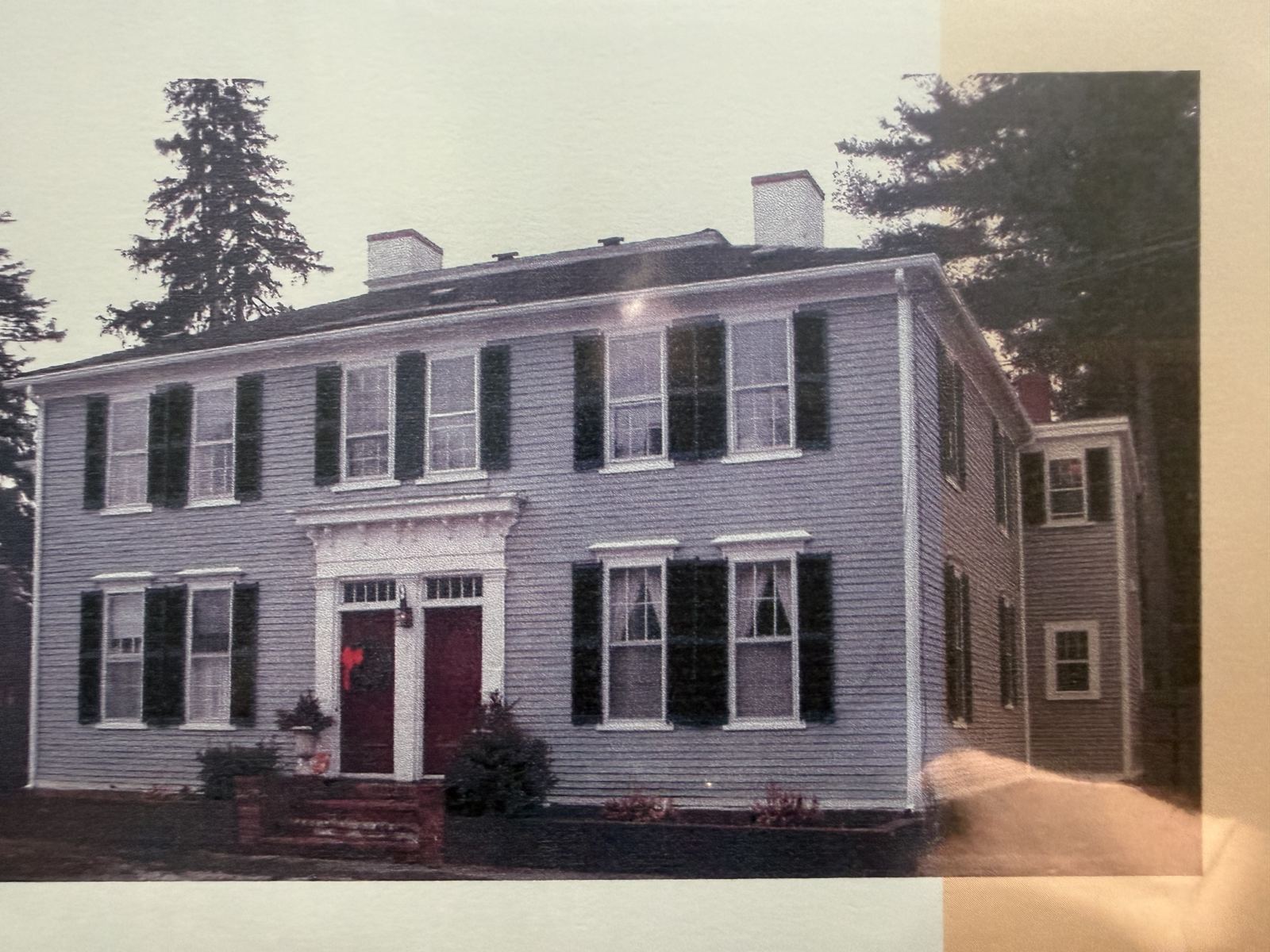
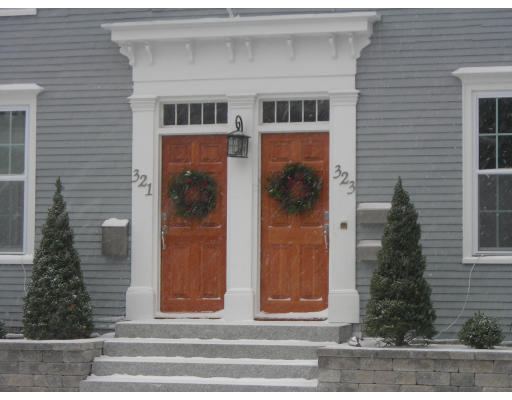
321 High Street is a Georgian dwelling on the most storied street in Newburyport. The National Register of Historic Places lists it within the Newburyport Historic District as a contributing dwelling of about 1775, in the mid-Georgian manner: two and a half stories, symmetrical, wood framed and clapboarded. When it was raised, this end of High Street still lay in the old town of Newbury; it became part of Newburyport in 1851. Early in the twentieth century the street was renumbered, and the dwelling that is now 321 and 323 was once numbered 297.
The Atkinson land and Farnum How
The ground was Atkinson land. The Atkinsons were among the families who settled Newbury in the 1630s and held many parcels in this part of town, known as Belleville. In 1793 John Atkinson, a hatter, sold a parcel here to Farnum How, a Newbury blacksmith, who had married Ednah Hale at Newbury in 1791. The deeds trace How as he rose in the world: a merchant by 1810, a gentleman by 1815. In 1815 he sold the dwelling and part of the land to William Wigglesworth, a chairmaker.
One dwelling, two households
In 1828 the dwelling passed through Moses Little, a lawyer, to Charlotte How, a Newbury schoolteacher, and a deed of that year divided it: two households under one roof, sharing the entry, the stairs and the cellar. By 1832 the southern half, today's 321, belonged to John Atkinson, whose deed ran the line between the halves through the middle of the front door. Charlotte How married William Mace, a shipbuilder, and the Maces kept the northern half, today's 323.
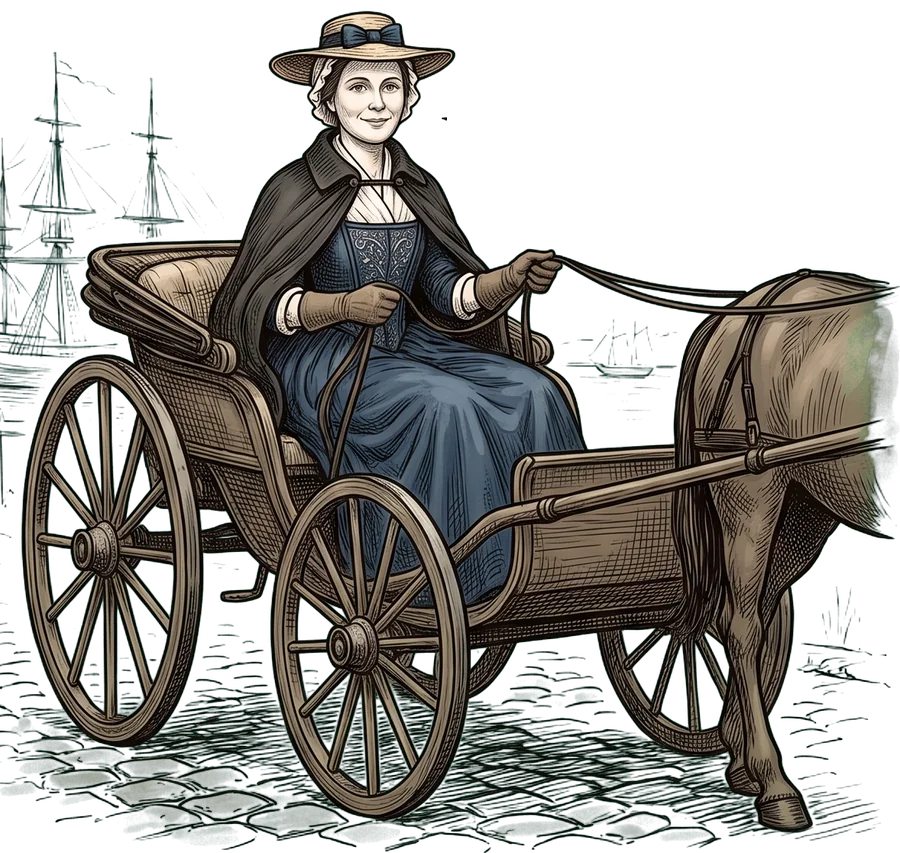
Sharing a front door was not always easy. In 1846 John Atkinson, by then a chaise and carriage builder, recorded a formal notice disputing the Maces' use of the well, the main entry, the cellar stairs and the way across his land to the woodhouse. How the neighbors settled it, no record says.
The Morses and the Victorian remodeling
In the 1860s James M. Morse and Sarah Morse acquired the south side. An 1864 deed speaks of a partition wall through the dwelling, and the paired front doorways with their arched moldings belong to the Victorian remodeling of these years; the city's records carry 1869 as a building year. On the 1884 atlas of Newburyport the lot is marked for Mrs. Mace and J. M. Morse. The Morse family kept 321 until January 1914.
The twentieth century
After the Maces, the north side passed through the Belleville Cemetery Association, to which Charlotte Mace left it, to Leander Cotton in 1905 and George Cooper, a bank teller, in 1909. On the south side, George Collis bought 321 in 1914. In 1919 Albert and Mary Fowler bought 321, and in 1920 they bought 323 as well, bringing the whole dwelling into one family's hands for the first time since 1828.
In 1923 the Fowlers sold to Jeremiah Foley, an engineer at the Newburyport Water Works, and his wife Bridget. The Foleys sold off part of the land in 1929. In 1956 the dwelling went to Joseph and Gertrude Gallant, and the Gallant family kept it for more than forty years, through 1998. In the mid twentieth century it was divided into apartments; in 1976 the family bought back the land the Foleys had sold, making the parcel whole again.

At a glance
- 1630sThe Atkinson family settles in Newbury.
- About 1775The National Register's date for the dwelling, mid-Georgian.
- 1791Farnum How marries Ednah Hale at Newbury.
- 1793John Atkinson, hatter, sells the parcel to Farnum How, blacksmith.
- 1815How sells to William Wigglesworth, chairmaker.
- 1828A deed divides the dwelling into two households.
- 1832John Atkinson owns the south half, the line run through the front door.
- 1846Atkinson's notice over the well, the entry and the cellar way.
- 1851This end of High Street joins Newburyport.
- 1864 to 1869The Morses; the partition wall; the Victorian doorways.
- 1884The atlas marks the lot for Mrs. Mace and J. M. Morse.
- 1914The Morse family's years at the dwelling end.
- 1920The Fowlers own both halves, one dwelling again.
- 1923The Foley family.
- 1956 to 1998The Gallant family.
- 1976The parcel made whole again.
Sources
National Register of Historic Places, Newburyport Historic District nomination, 1984, High Street data sheet. Vital Records of Newbury, Massachusetts, to the end of the year 1849, marriages. Deeds at the Essex County registry, as traced in a private house history prepared for an earlier household. The 1884 atlas of Newburyport. City of Newburyport assessor's records. Dates and details are given in good faith from these sources and are not warranted.